Description
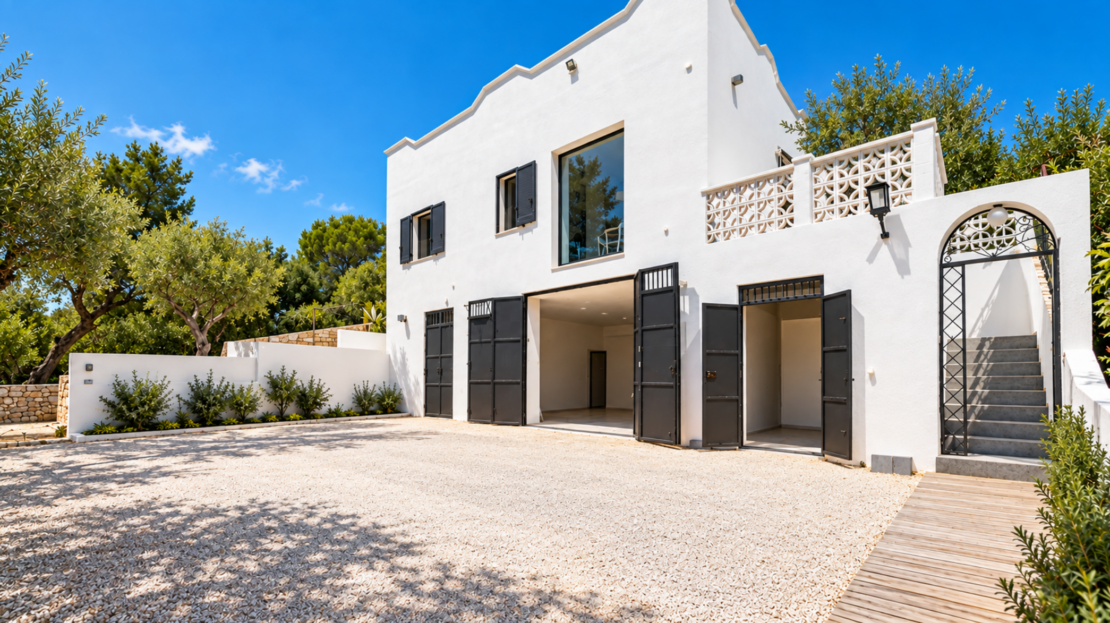
In the stretch of the Itria Valley between Cisternino and Fasano, where stone emerges among the olive trees and the horizon is punctuated by the distinctive cones of the trulli, a villa set within approximately 7,115 sqm of olive grove commands a ridge with nothing before it but the gentle slope of the olive trees and, in the distance, the white cones scattered across the countryside. Beyond the driveway gate, a gravel lane winds uphill between whitewashed dry-stone walls to the entrance courtyard, where the façade, with its graceful mixtilinear profile — a sinuous crowning feature characteristic of the Brindisi hinterland, subtly referencing the Baroque without imitating it — introduces the house with a quiet confidence that needs no ostentation.
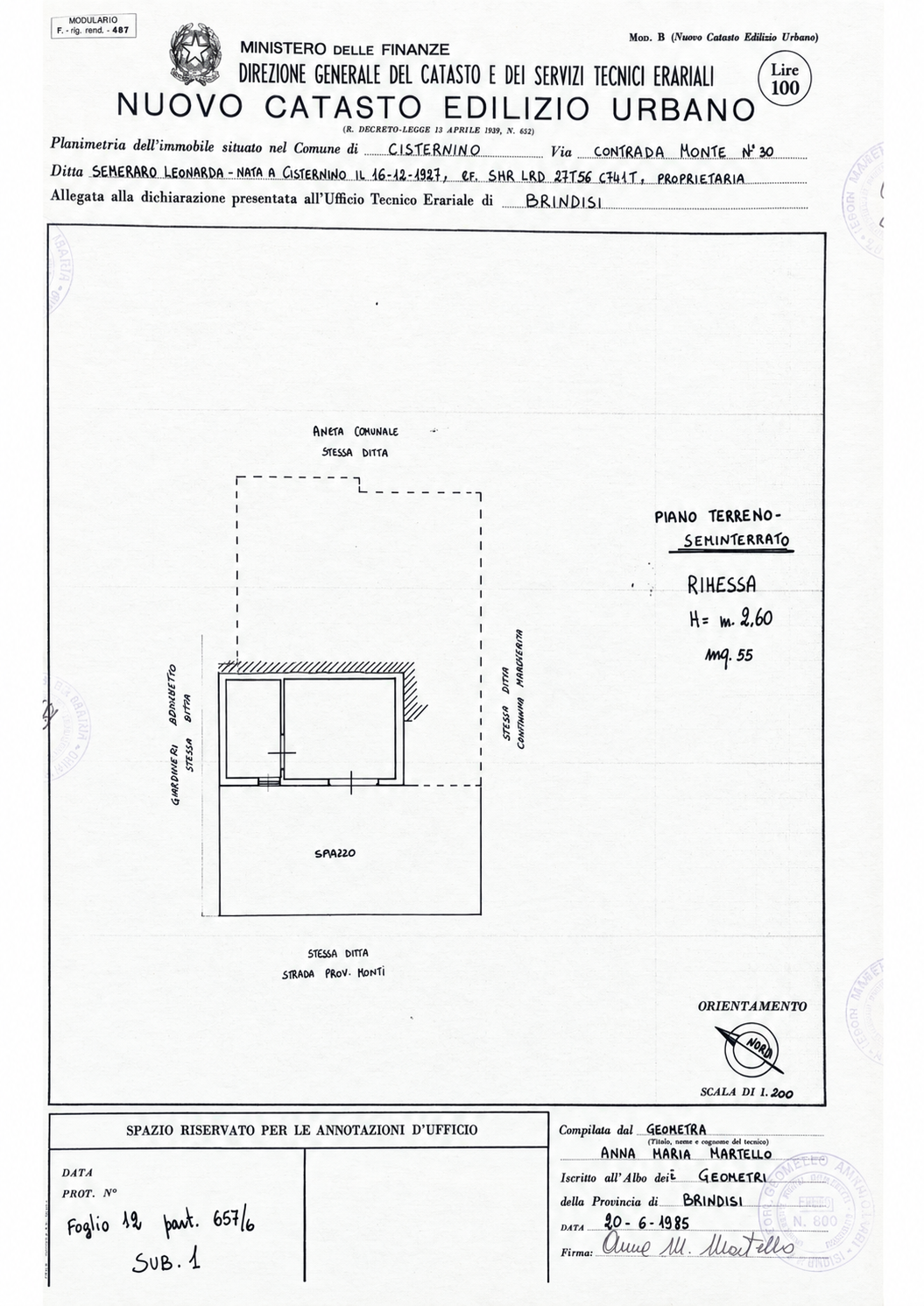
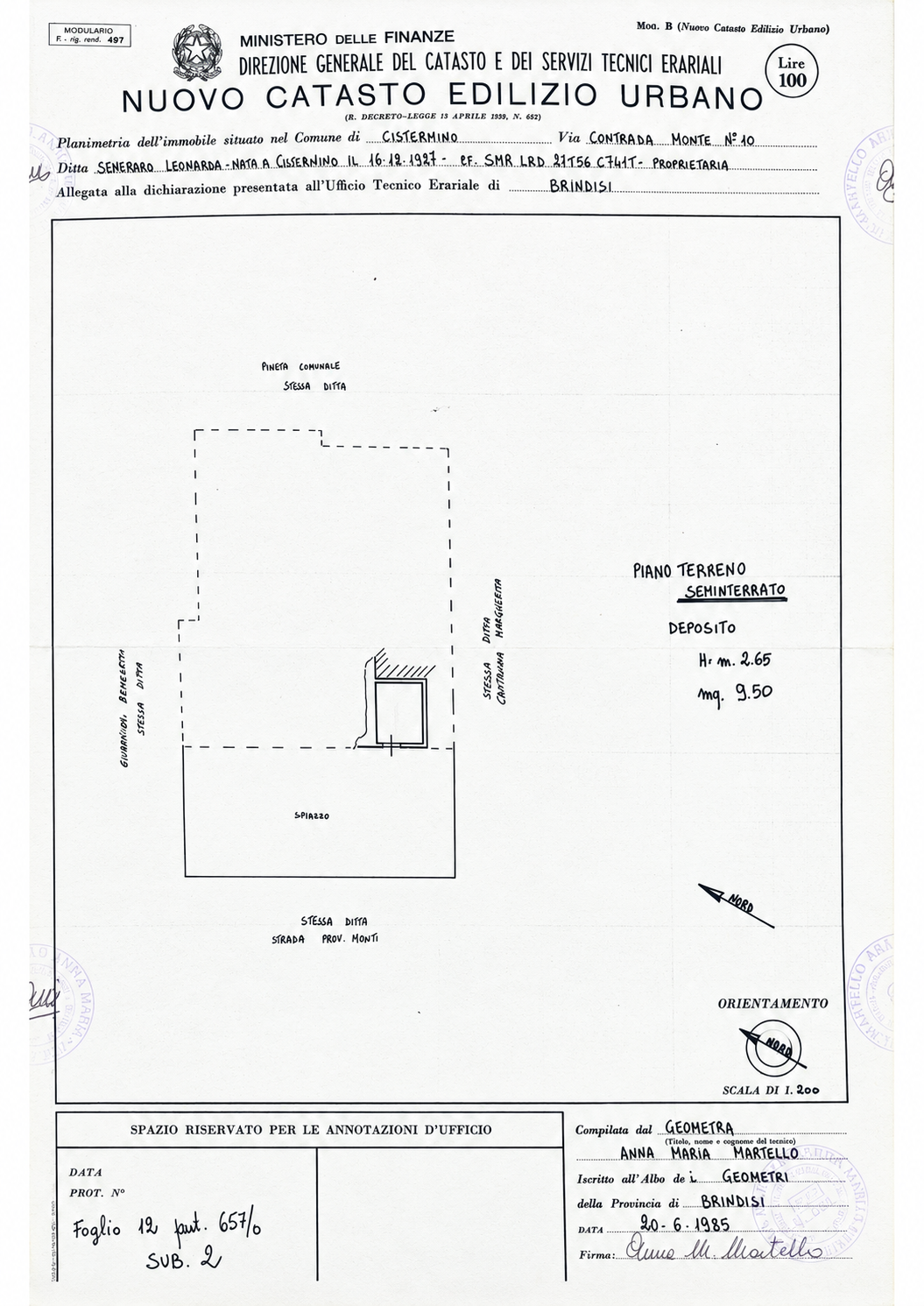
Three dry-stone trulli belong to the property, and they are perhaps its rarest gift. The first is already woven into everyday life, set into the perimeter wall of the service courtyard, with its monolithic stone lintel and pale wooden door. The other two stand higher up among the olive trees, their cones still intact — timeless stone structures waiting only for a discerning hand to transform them into guest rooms, a private studio, or that quiet retreat every home should have.
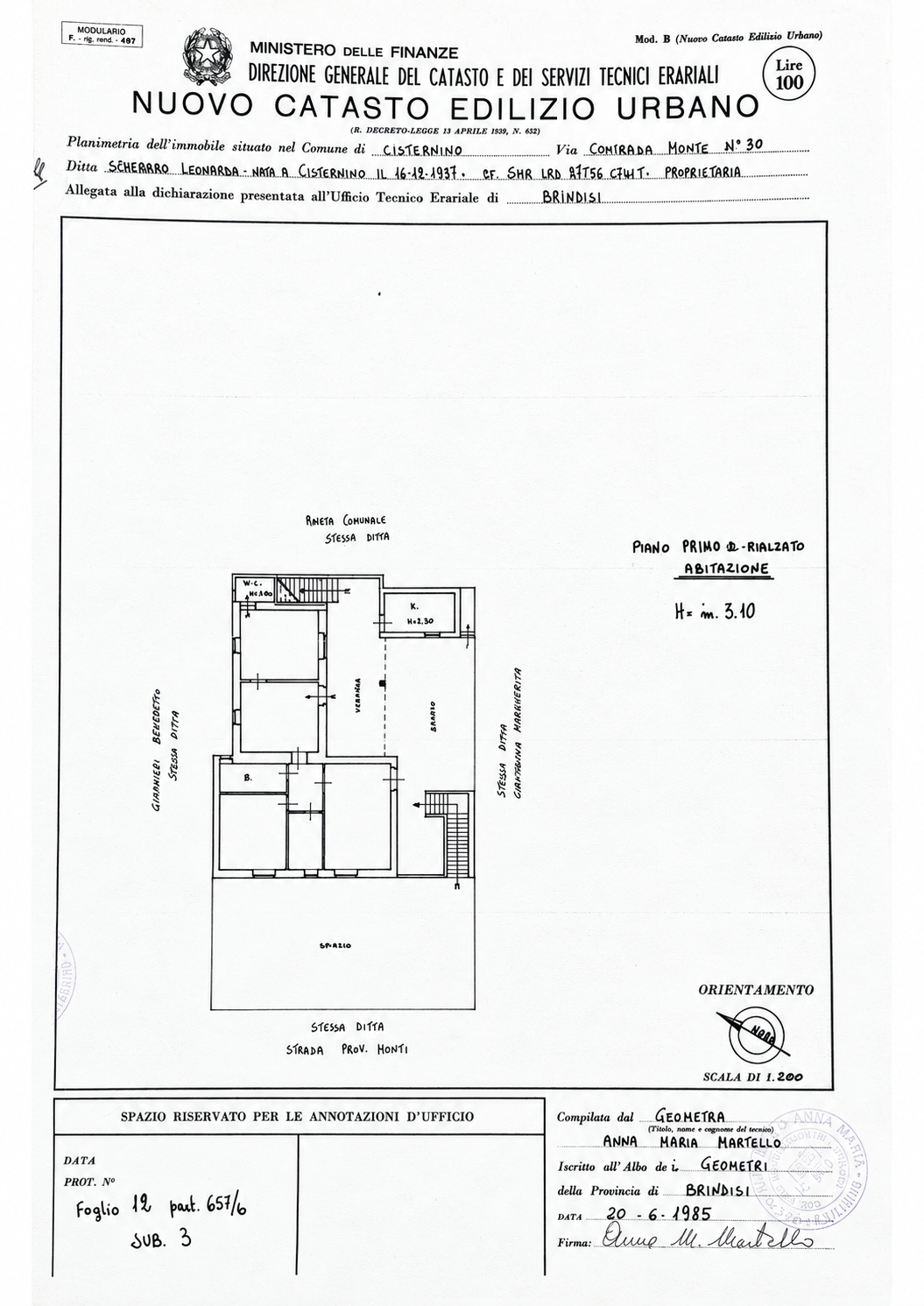
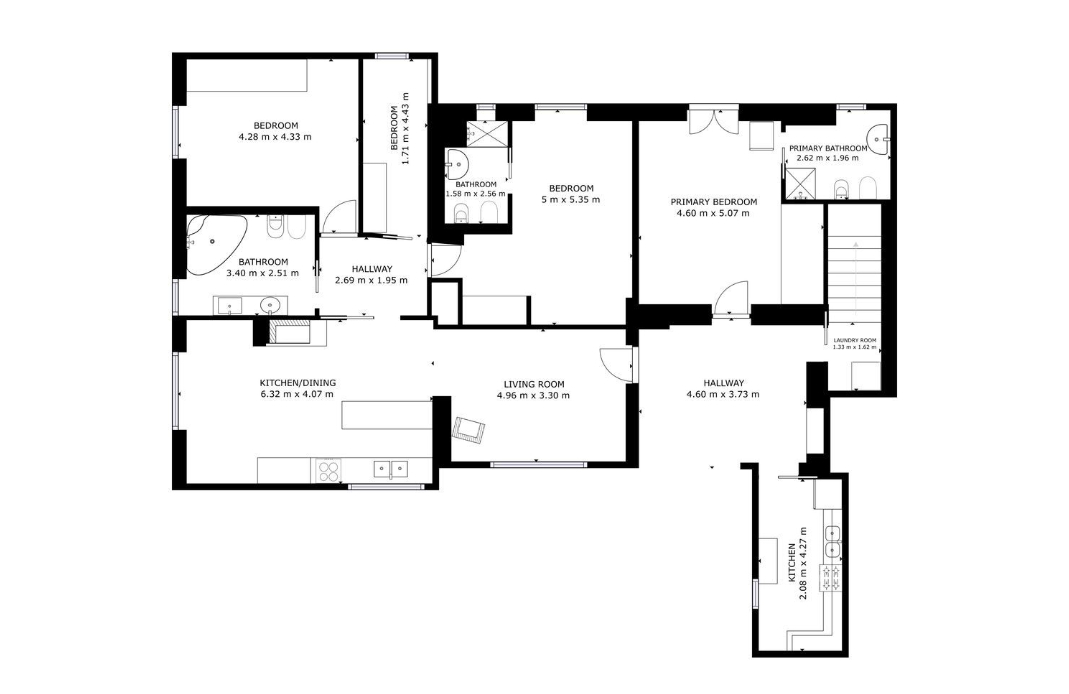
The villa is arranged over two levels, with a total internal area of 225 sqm. On the ground floor are the garage and storage rooms, secured by large dark metal doors; from here, an external cobbled staircase and a wrought-iron arched gateway lead up to the main living floor, where the character changes completely. The interiors are contemporary and fully finished: wood-effect porcelain stoneware throughout, a kitchen with island and built-in appliances, a flush-mounted fireplace set against a backdrop of black-and-white cement tiles, a master bathroom with a corner whirlpool tub and dark stoneware slats, and a second bathroom with shower. Four bedrooms and three bathrooms are arranged in such a way as to allow the property to be divided into two independent units — a solution equally suited to a growing family or to those envisioning hospitality use.
But it is the panoramic glass wall in the living room that truly defines the house. Full-height and uninterrupted by mullions, it frames the valley like a canvas: olive trees in the foreground, the landscape gently descending into green, and the trulli scattered along the opposite ridge. It is the view one hopes to find in the Itria Valley, yet rarely encounters with such an open outlook, free from buildings competing for the eye. Outside, the same theme continues: the paved veranda, with its retractable awning and pierced balustrade, becomes a second living room during the warmer months, while the expansive roof terrace opens onto a 360-degree panorama of the countryside — the kind of place where, in this part of Puglia, one inevitably ends up as evening falls.
Approximately 120 productive olive trees complete the setting, together with a small vineyard: not an ornamental garden, but a living piece of countryside that yields olive oil every year and, in return, asks only for the care each season requires. Those looking for a home will find a property that is ready to enjoy, with interiors requiring no further work, a landscape no architect could ever design, and two trulli still waiting to be imagined. Those considering an investment will immediately recognise the value of the location — the Cisternino-Fasano corridor is among the most sought-after areas in Puglia — as well as the potential of a property that, once its stone buildings are fully restored, speaks precisely the language of the international market. In the Itria Valley, one buys a landscape before one buys a house: here, you have both.